
Guide
Why a Door Goes Off Track in Warren
Warren houses built between 1938 and 1981 carry original track hardware that cold winters and decades of settling can knock loose. Here's why doors jump track here.
Local detail
The Problem
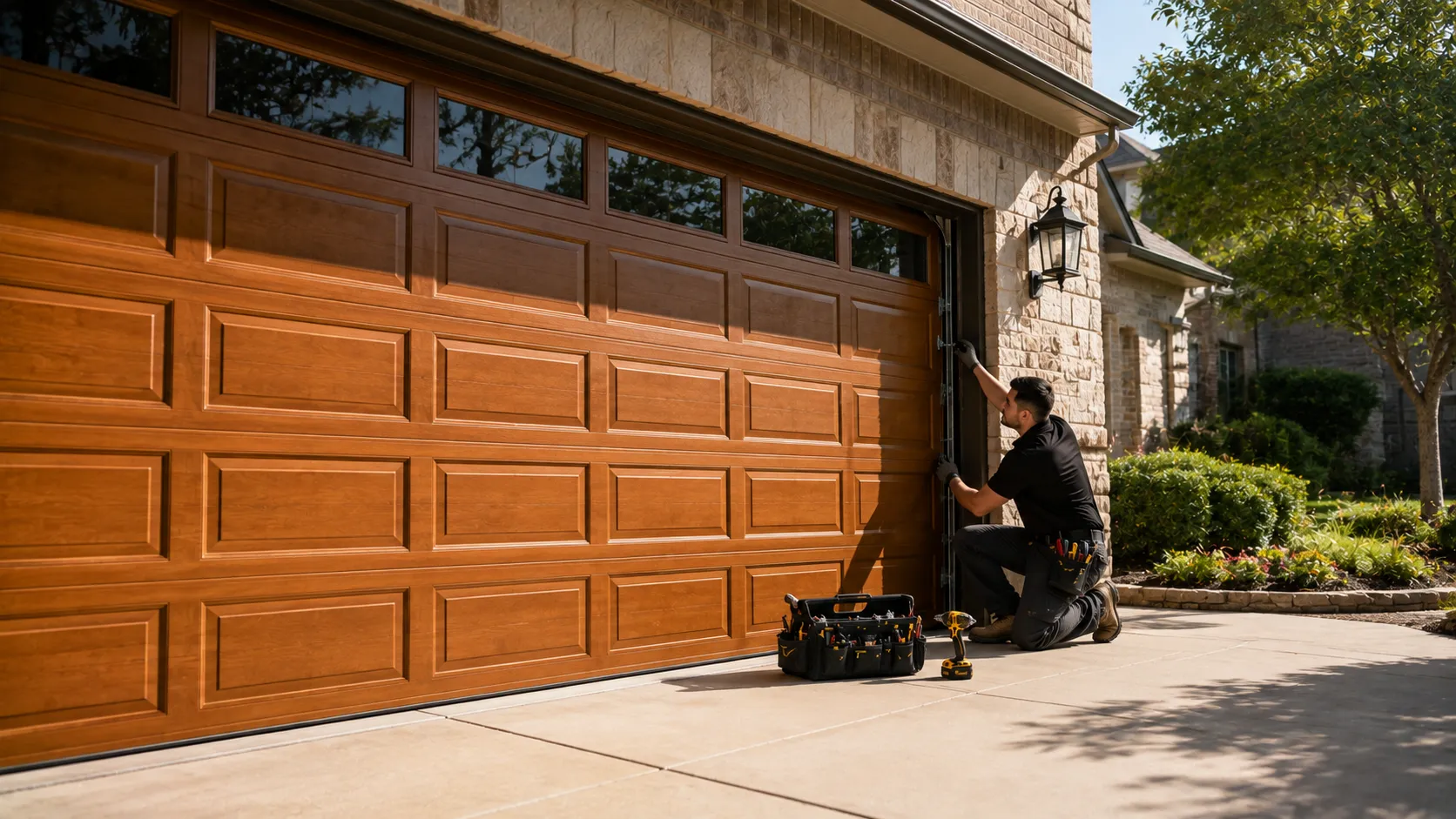
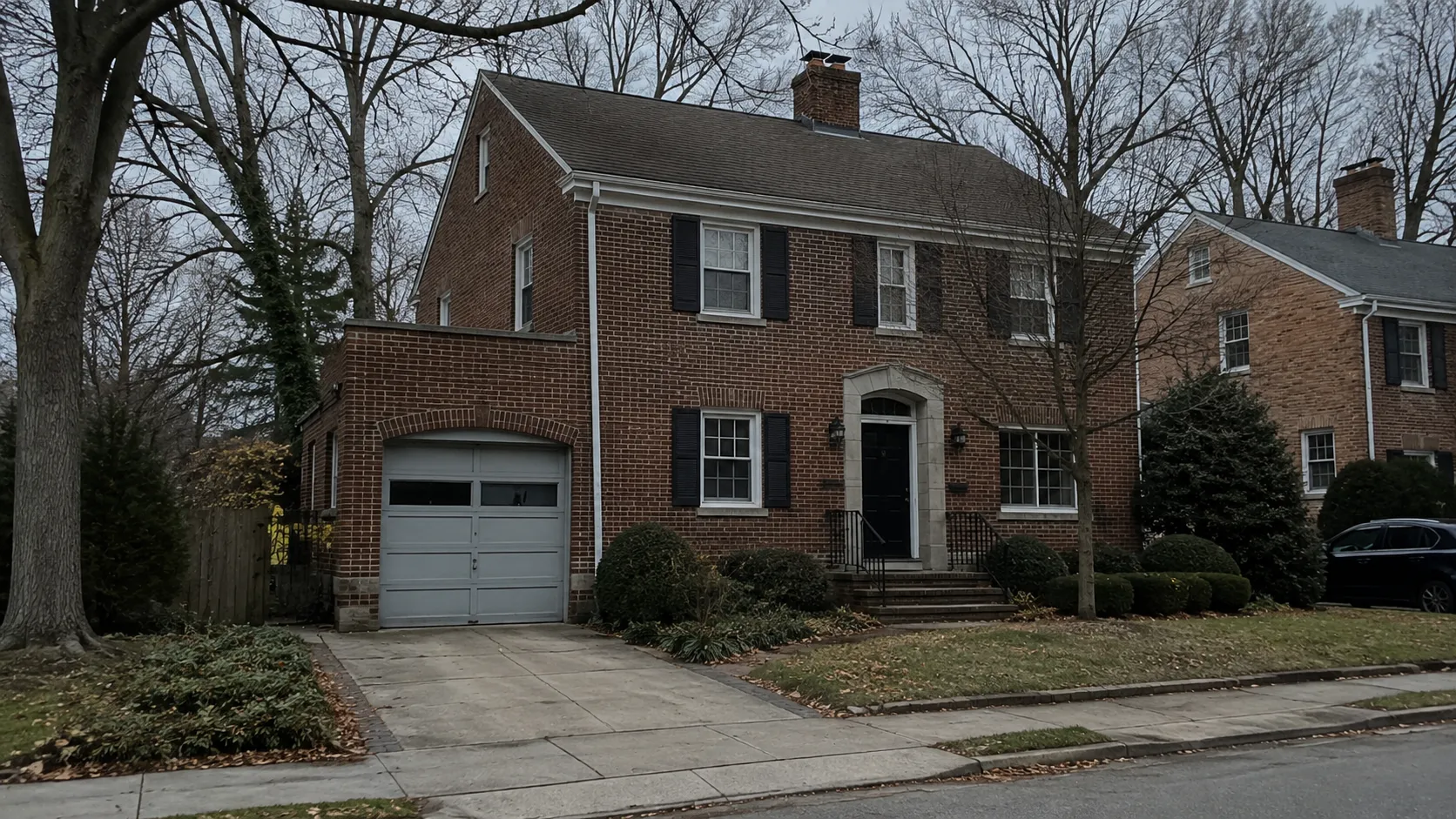
A door off track doesn't happen because someone slammed it once. It happens because the rollers stopped riding true inside the vertical or horizontal rail, and once a roller climbs the lip of the track, the whole panel can walk sideways or drop crooked in the opening. On a lot of Warren houses, built between 1938 and 1981 with a median around 1963, the track hardware is original or close to it. That's sixty-plus years of brackets holding position against a house that has settled, framing that has shifted a quarter inch here and there, and steel that has expanded and contracted through every winter since Eisenhower. The track itself doesn't wear out fast. What gives out first is the fastening - lag screws backing out of jamb wood that's dried and shrunk, or a bent bracket that no longer holds the rail plumb. Once the rail is even slightly out of alignment, every cycle of the door pushes the rollers a little further toward the edge until one of them finally jumps clear.
This is different from a spring failure or an opener problem, and it's worth telling apart. A door that won't move at all is usually springs. A door that moves but travels crooked, scrapes one side, or comes to a stop mid-cycle with a bang is a track issue.
The area
What Local Conditions Do
Warren sits in a cold-severe climate band, and that matters more for tracks than most homeowners expect. Steel rail contracts in deep cold, and the brackets bolted to a wood jamb move at a different rate than the jamb itself does. Over a winter, that mismatch works the fasteners loose a fraction at a time. It's not dramatic - nobody hears it happen - but by the time a bracket has backed out enough to let the rail flex, the rollers start tracking off center every time the door runs.
The other factor is lubrication going stiff in the cold. Rollers that are already slightly worn ride rougher when the grease inside them thickens, and a rough-riding roller is more likely to catch the track edge instead of gliding past it. On the 1960s-70s housing stock that makes up most of the area across the 22 named neighborhoods here, galvanized track from that era was built to a lighter gauge than what goes in today. It holds up fine under normal use, but it has less margin for a bracket that's come loose or a jamb that's shifted, which is exactly the failure mode cold-climate houses of this age run into.
What we find
Where People Go Wrong
The most common mistake is bending the track back into place by hand or with a pry bar after it's already jumped. It looks like a fix - the door runs again - but a track that's been bent once is weaker at that bend and will let go again, usually sooner than the first time. The right move is replacing the section, not straightening it.
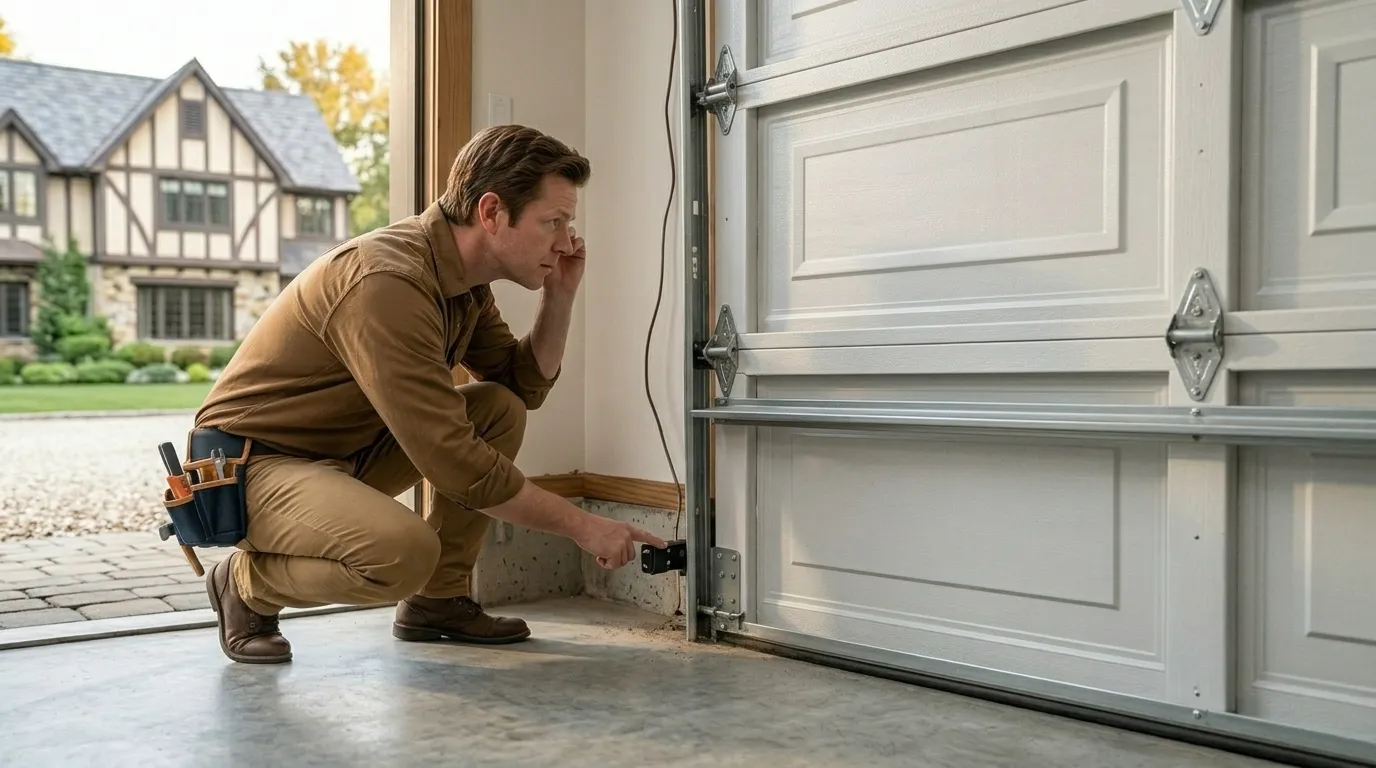
The second mistake is tightening the loose lag screws back into the same worn holes in the jamb. In houses from this era, that wood has been drilled and redrilled enough times that the screw has nothing left to bite. It'll hold for a few weeks and then work loose again. The fix that actually lasts is relocating the bracket to solid wood or backing it with a plate, not just cranking the same screw tighter.
Third, people replace the rollers and call it done without checking whether the track itself is still plumb. New rollers in a bent or misaligned track will jump again in short order - you've fixed the part that was easiest to see, not the part that caused the problem.
How we work
Checking It Yourself
Before you call anyone, look at three things with the door closed. First, stand back and sight down each vertical track - it should run straight up with no visible kink or bow. Second, check the brackets where the track bolts to the jamb; if you can wiggle one by hand, that's your loose fastener. Third, run the door with the lights on and watch the rollers at the curve where vertical track turns to horizontal - that's where a roller most often jumps first.
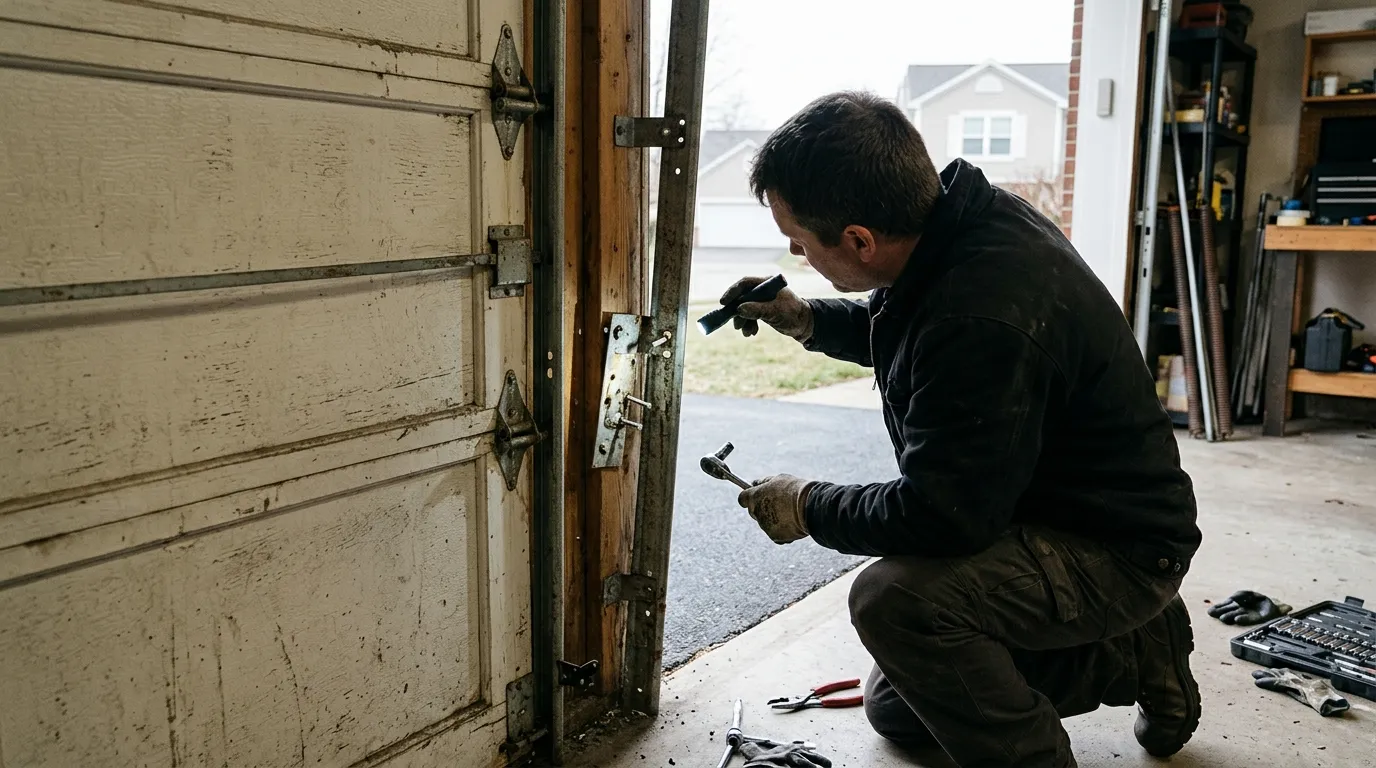
What you shouldn't do is keep running the door once you see a roller riding the edge of the rail instead of the channel. Every cycle after that makes the eventual jump worse, and a door that comes off track while it's moving can drop a panel hard enough to warp it. That's the honest limit here: this is a look-and-listen check, not a repair guide. Bent track, worn brackets, and jamb wood that won't hold a screw anymore are jobs for tools and replacement parts, not a Saturday afternoon fix, and calling it in before the door jumps completely is cheaper than after.
Questions
Common questions
Why does my garage door only go off track in winter?
Cold makes steel track contract and grease inside the rollers stiffen up, so rollers ride rougher right when the fasteners holding the track are already under the most strain from temperature swings. In a cold-severe climate like this one, that combination is what usually pushes a marginal track over the edge.
Is a bent track ever safe to just straighten and reuse?
No. Once a track section has bent enough to let a roller jump, the metal has a weak point at that bend. Straightening it gets the door running again short-term, but it will typically fail again at the same spot. Replacing the section is the only fix that holds.
My house is from the 1960s - is that why the brackets keep loosening?
Likely, yes. Warren's housing stock is mostly 1960s-70s, and jamb wood that's been drilled repeatedly over sixty years often can't hold a lag screw the way it did originally. Relocating the bracket to solid wood usually outlasts just retightening the same hole.
Ready when you are
Need a garage door sorted in Warren?
Warren Garage Door Pros repairs and installs garage doors, springs and openers in Warren, OH and the surrounding area.