
Guide
What Your Garage Door Is Trying to Tell You
Warren homes built mostly 1960-1975 pair aging hardware with hard winters. Here's what each garage door noise actually means before it becomes a call.
Local detail
The Problem
A garage door doesn't fail quietly. It bangs, grinds, pops, or hums for weeks before it quits. In Warren, that noise usually has a specific cause because the housing stock has a specific age.
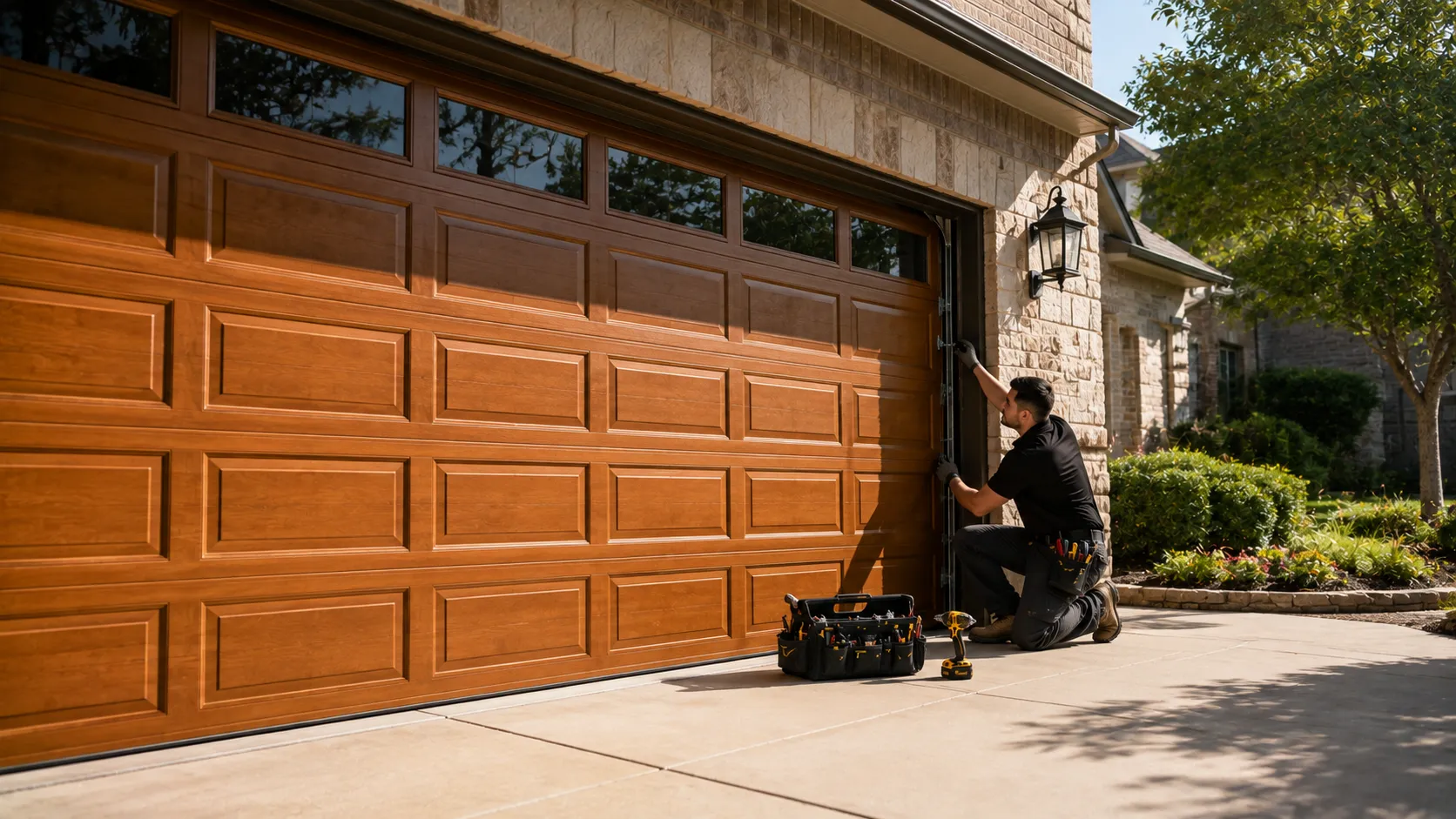
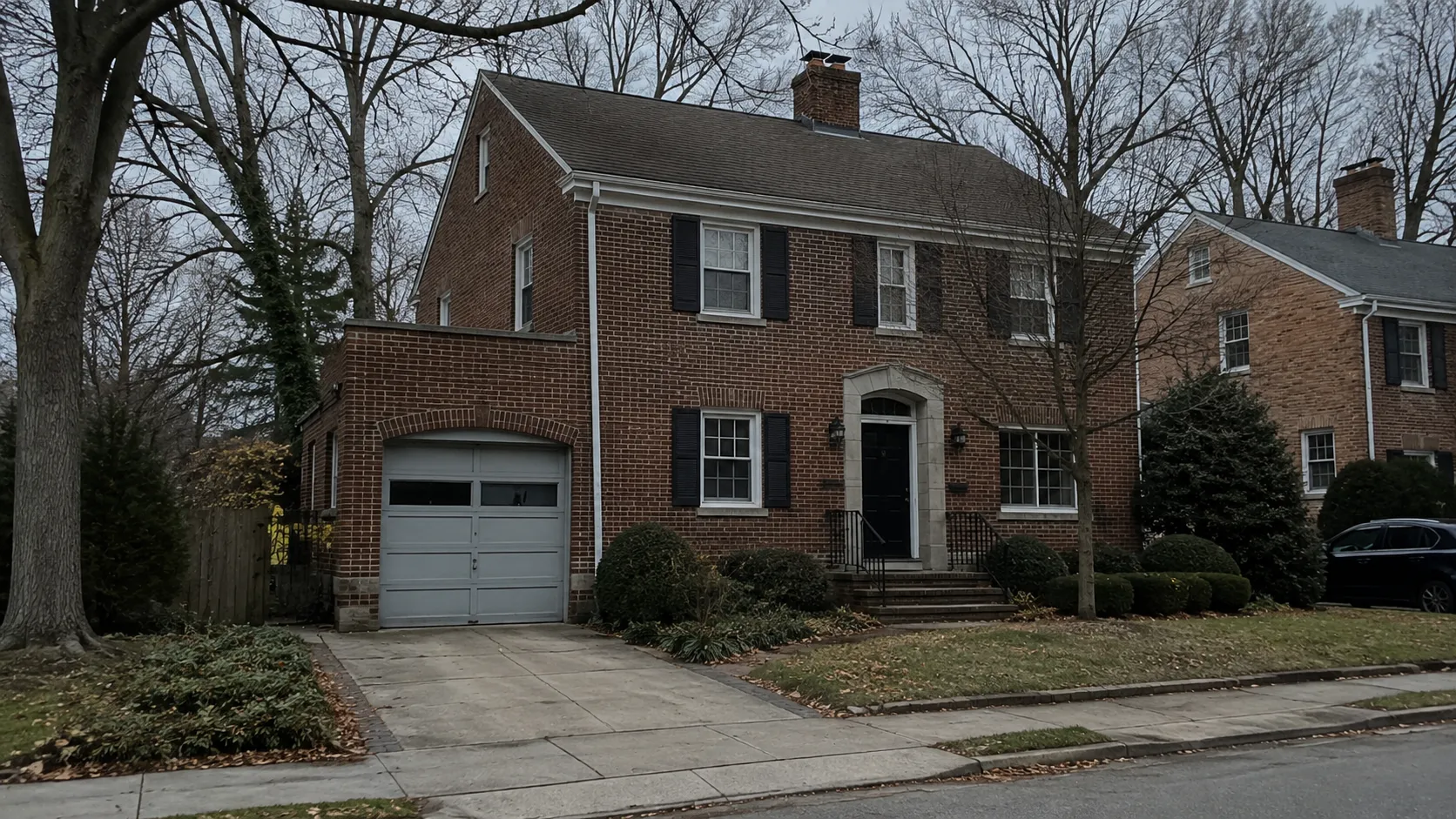
Most of the 22 named areas we work across were built between 1938 and 1981, with the median year sitting around 1963. That means the door and opener hardware in a big share of these garages is either original steel that's now sixty-plus years old, or a first-generation replacement installed sometime in the 1980s or 90s when the original wore out. Either way, you're dealing with parts that were never designed to handle today's openers, and rollers and hinges that have outlived their lubrication cycles several times over.
A new grinding sound on a door that age isn't random - it's usually a roller that's worn flat on one side, or a hinge pin that's finally lost its factory coating. The noise is the hardware telling you it's near the end of its service life, not the start of a random malfunction.
The area
What Local Conditions Do
This area sits in a severe cold climate band, and that changes what noise means here versus somewhere milder. Steel contracts hard in sub-freezing temperatures, and a torsion spring that's slightly undersized or worn will make a distinct popping or creaking sound as it takes up that contraction on a cold morning. Grease that was fine in August turns thick and sticky by January, which is why a door that ran quiet all summer suddenly starts groaning through its travel in winter.
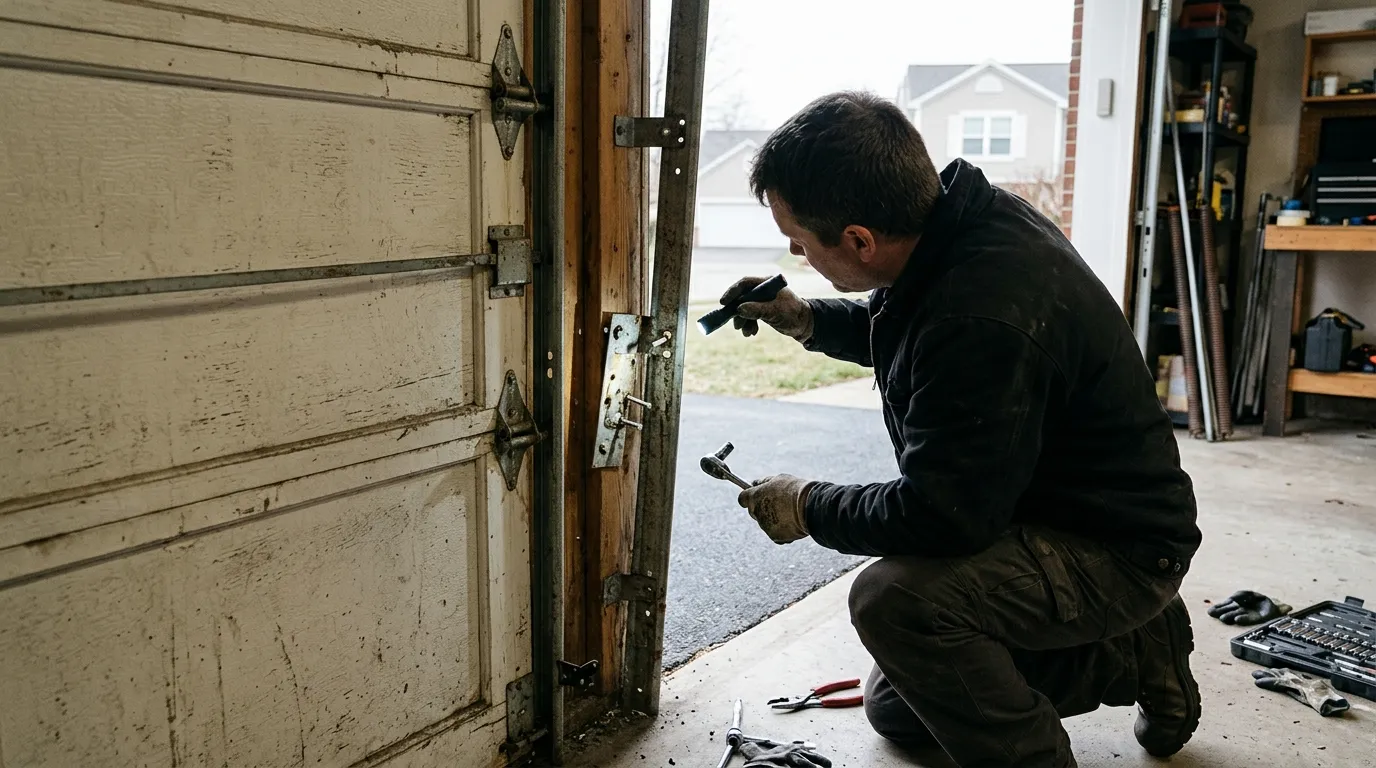
Track alignment also shifts more here than in a warm-climate house, because the slab and the door frame move slightly with frost heave over decades. On a house built in the 1960s or 70s, that slow shift has had fifty-plus winters to work on the original bolts and brackets. A scraping sound low on the track, right where the door meets the floor, is often that seasonal movement finally catching up with hardware that was torqued for a house that's since settled.
What we find
Where People Go Wrong
The mistake we see most in this area is spraying WD-40 on a noisy spring or roller and calling it fixed. WD-40 is a solvent, not a lubricant - it strips old grease and leaves metal drier than before, which makes the noise worse within a few weeks. The other common mistake is ignoring a single loud bang as a one-time thing. On a door old enough to have entered service any time between 1938 and 1981, a single bang from the spring area is very often the spring beginning to fail, not settling.
Waiting on that one is how a repair call turns into an emergency call, usually on a night when it's below freezing and the spring finally lets go. We won't tell you every noise needs a truck out same day. A quiet, occasional squeak on an opener chain is usually just dry chain - that one you can often handle yourself before it becomes anything else.
How we work
Checking It Yourself
Before you call anyone, do this: run the door with the light off and the radio down, and listen for where the sound starts and stops in the travel. A noise only at the very top or bottom usually points to a bent track section or a loose bracket at that spot, both common on houses from the 1960s and 70s where the original hardware has flexed for decades. A steady grinding the whole way up usually means a roller.
A sharp pop right as the door starts to move is almost always spring tension, and that one is not a DIY fix - springs under tension can cause serious injury and this is where we tell you plainly to stop and call instead of reaching for a ladder. If the noise is new and the door still opens and closes fully, you have some time. If the door hesitates, reverses on its own, or the noise comes with visible cable fraying, that's a same-day matter, not a wait-and-see one.
Questions
Common questions
Why does my garage door make more noise in winter than summer?
Steel hardware contracts in cold, and grease that worked fine in warm months turns thick when temperatures drop. In this area's cold climate, that combination shows up as popping from the spring area and groaning along the track, especially on houses with original 1960s-70s hardware that's never been relubricated.
Is a loud bang from the garage door always the spring?
Not always, but it's the most common cause, especially on doors this old. A torsion spring nearing failure often makes one or two loud pops before it actually breaks. If you hear a bang and the door still moves normally afterward, get it checked soon rather than waiting for it to happen again.
Can I fix a noisy roller myself?
Sometimes, if it's just dry and squeaking - a proper garage door lubricant (not WD-40) on the roller stems and hinges can quiet things down. If the roller is visibly worn flat on one side or wobbling in its track, that's a replacement job, not a lubrication one.
How old is the hardware in most Warren-area garages?
A large share of houses across this service area were built between 1938 and 1981, with the median year around 1963. That means a lot of doors are running on original or first-replacement hardware from decades ago, which explains a lot of the noise calls we get.
Ready when you are
Need a garage door sorted in Warren?
Warren Garage Door Pros repairs and installs garage doors, springs and openers in Warren, OH and the surrounding area.