
Guide
What a 1963-Built Garage Really Needs in Warren's Winters
Warren garage door repair for homes built 1938-1981, when insulation codes were looser. Cold-climate fixes for the doors this era's houses actually have.
Local detail
The Problem
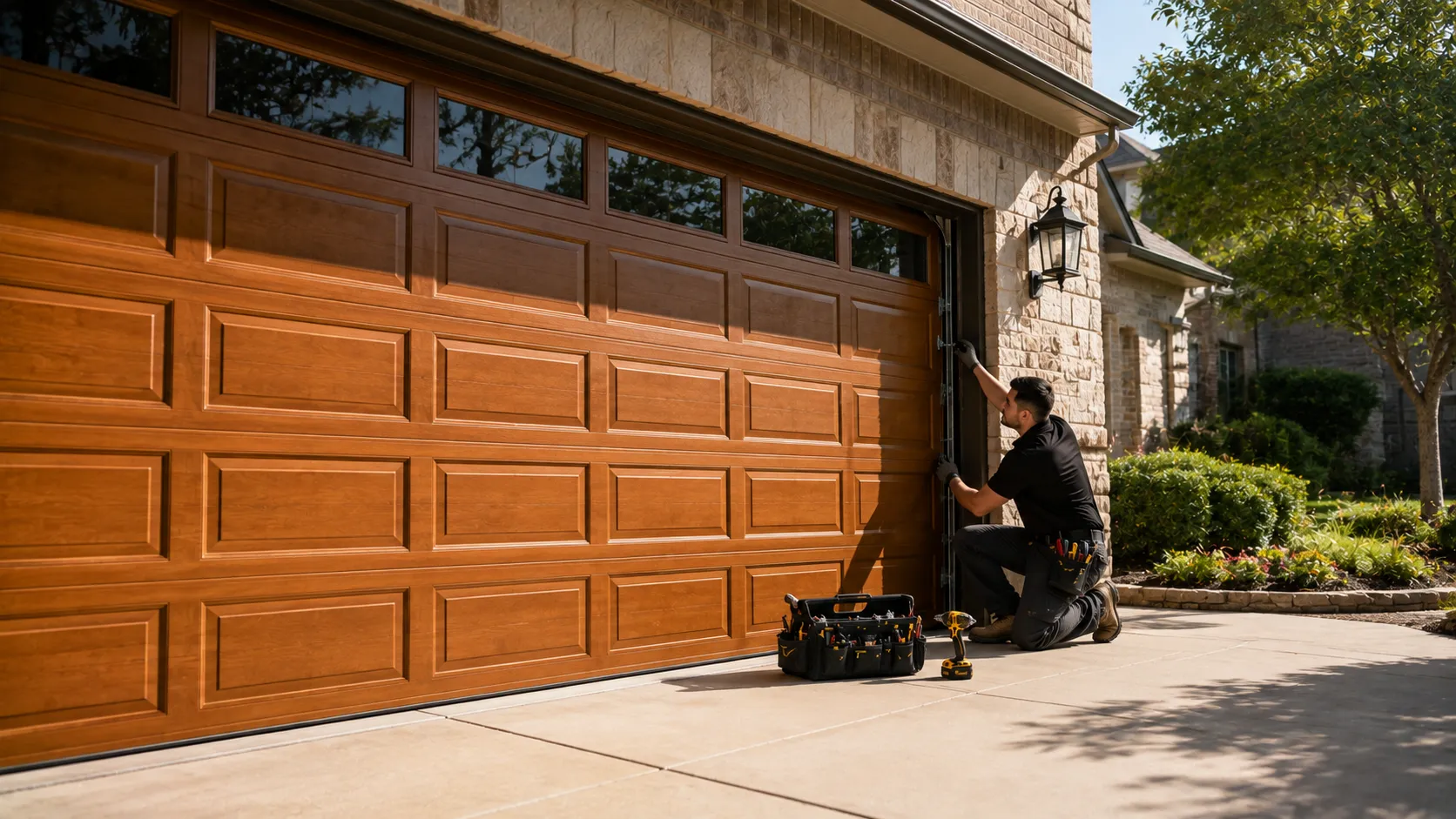
Most houses in this service area went up between 1938 and 1981, with the median sitting at 1963, back before energy codes required insulated garage doors. That means a lot of the doors still hanging on these houses are single layer steel or old wood panel, with no vapor barrier and no thermal break behind them. Nobody built for winter heat loss through a garage door back then because nobody was required to.
Across the 22 named areas this shop covers, from Leavittsburg three miles out to Lowellville twenty miles south, the bulk of the housing stock is 1960s and 70s construction. That's not a coincidence - it's the wave of building that hit this part of Ohio in that stretch, and it left a lot of garages with the same era of hardware: torsion springs sized for lighter, thinner doors, tracks bolted straight into wood jambs that have had sixty winters to shift.
The problem isn't that these doors are broken. Most aren't, yet. The problem is that the parts on them were never designed to handle the swings we get now, and nobody's swapped the weak points before they fail.
The area
What Local Conditions Do
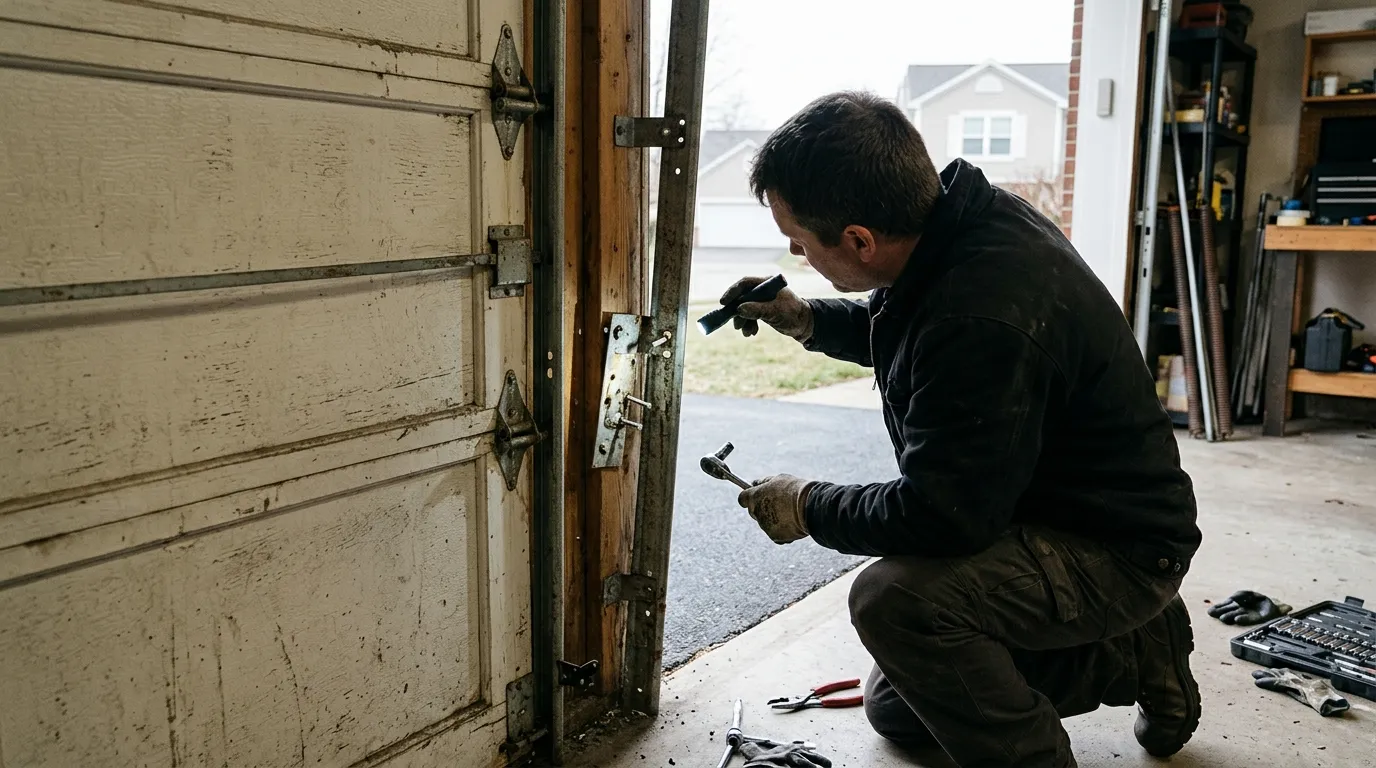
Warren sits in a cold climate band rated severe, which means steel panels contract hard enough each winter to pop loose fasteners on doors already forty-plus years old. Cold steel shrinks. On a door with a thermal break, that shrinkage is absorbed by the insulation layer. On a 1960s single-skin door, it isn't - the panel just gets tighter against the track, the rollers bind, and the opener starts working harder than it should on every cold morning.
Grease is the other half of it. Old lithium grease on original hardware thickens hard in severe cold, which means the spring and the rollers are fighting stiff lubricant on top of everything else. Owners hear this as a slow, grinding start-up, and they usually blame the opener when the actual load is coming from cold-stiffened moving parts that haven't been serviced since installation.
A door built when the median local house went up in 1963 has no thermal break, so cold-soaked steel here shrinks against the track in a way newer double-skin doors don't. That's the mechanical reality behind most of the winter service calls in this area - not a broken part, but an old part meeting a season it wasn't built for.
What we find
Where People Go Wrong
With 35,694 owner-occupied houses across this area and a median household income of $62,149, most owners are working with the original door opening, not a widened one, and they go to a hardware store or big-box shelf for a replacement spring or roller sized off the door's rough measurements rather than its actual year and gauge. A spring rated for a modern lightweight door doesn't carry the same load as one built for a 1960s solid panel, and it fails faster, sometimes within a season.
The other mistake is assuming the opener is the problem. When a door from this era starts groaning or hesitating in cold weather, the opener motor is usually just doing what it's told against resistance that shouldn't be there. Replacing the opener without addressing stiff cold-weather hardware underneath it fixes nothing - the new opener strains the same way within a winter or two.
We don't recommend guessing on spring specs for a door this old. If the hardware doesn't match a known model number, matching it by eye is how people end up with a spring that's either too weak to lift the door safely or wound tight enough to be dangerous to work on.
How we work
Checking It Yourself
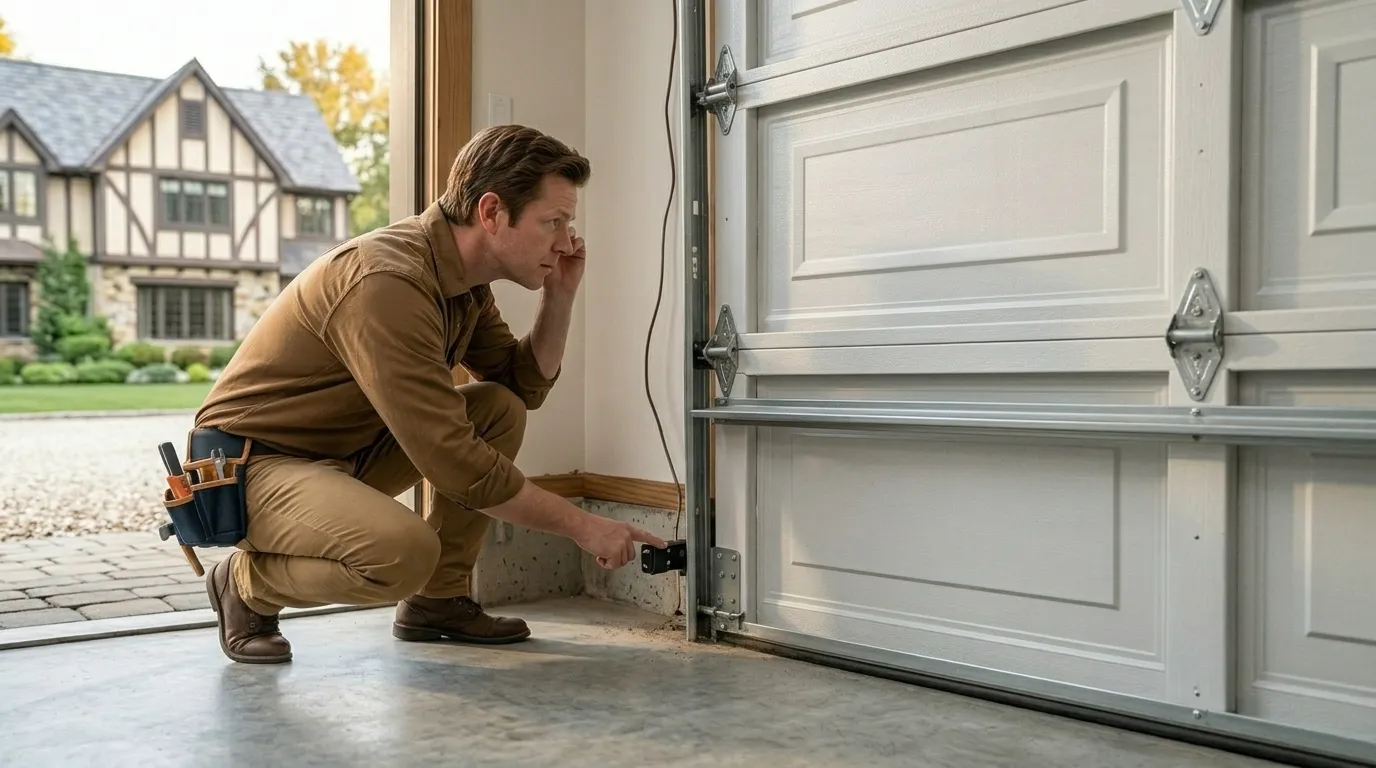
Look at the springs first. If they're painted over or rusted with no visible model tag, that's a sign they're original to a house built well before current codes and worth having checked rather than replaced blind. Pull the manual release and try lifting the door by hand - if it feels heavy or uneven, one spring is likely carrying more load than the other, common on doors this old.
Check the weatherstripping at the bottom panel. On original doors from this housing wave, it's usually a thin rubber strip, not a sealed track system, and it dries out and cracks in severe cold within a few winters of replacement. That's an easy, honest fix - a bottom seal swap is cheap and doesn't require touching the spring system at all.
One limitation worth saying plainly: if the door itself is original steel from this era with visible rust-through at the bottom panel, patching springs and rollers buys time but doesn't solve the underlying problem. At that point replacement is usually the better spend than another repair. We'll tell you which side of that line your door is on rather than sell you a repair that won't hold.
More on the shop and service area is at [/](/).
Questions
Common questions
Is my garage door original to the house?
If your house was built in the 1960s or 70s, which covers most of this area, and the door hardware has no visible model tag or shows heavy surface rust, there's a good chance it's original or close to it. That matters because spring specs and track hardware from that era don't match what's sold off the shelf today.
Why does my door get harder to open in winter?
Cold steel contracts against the track, and old lubricant thickens in severe cold, both of which add resistance the opener has to fight. On doors without a thermal break - common on houses built before current insulation codes - this effect is stronger than on newer double-skin doors.
Should I replace the opener or the door hardware first?
Check the door hardware first. A struggling opener on an older door is often just responding to stiff springs, dry rollers, or a bound track. Replacing the opener before fixing that usually just moves the strain to a new motor, which then fails the same way within a season or two.
How do I know if it's time to replace the door instead of repair it?
If the panel itself is original steel with rust-through at the bottom or a warped frame, repairs to springs and rollers buy time but don't fix the underlying panel. That's when replacement is the better spend. We'll tell you honestly which side of that line a given door is on.
Ready when you are
Need a garage door sorted in Warren?
Warren Garage Door Pros repairs and installs garage doors, springs and openers in Warren, OH and the surrounding area.