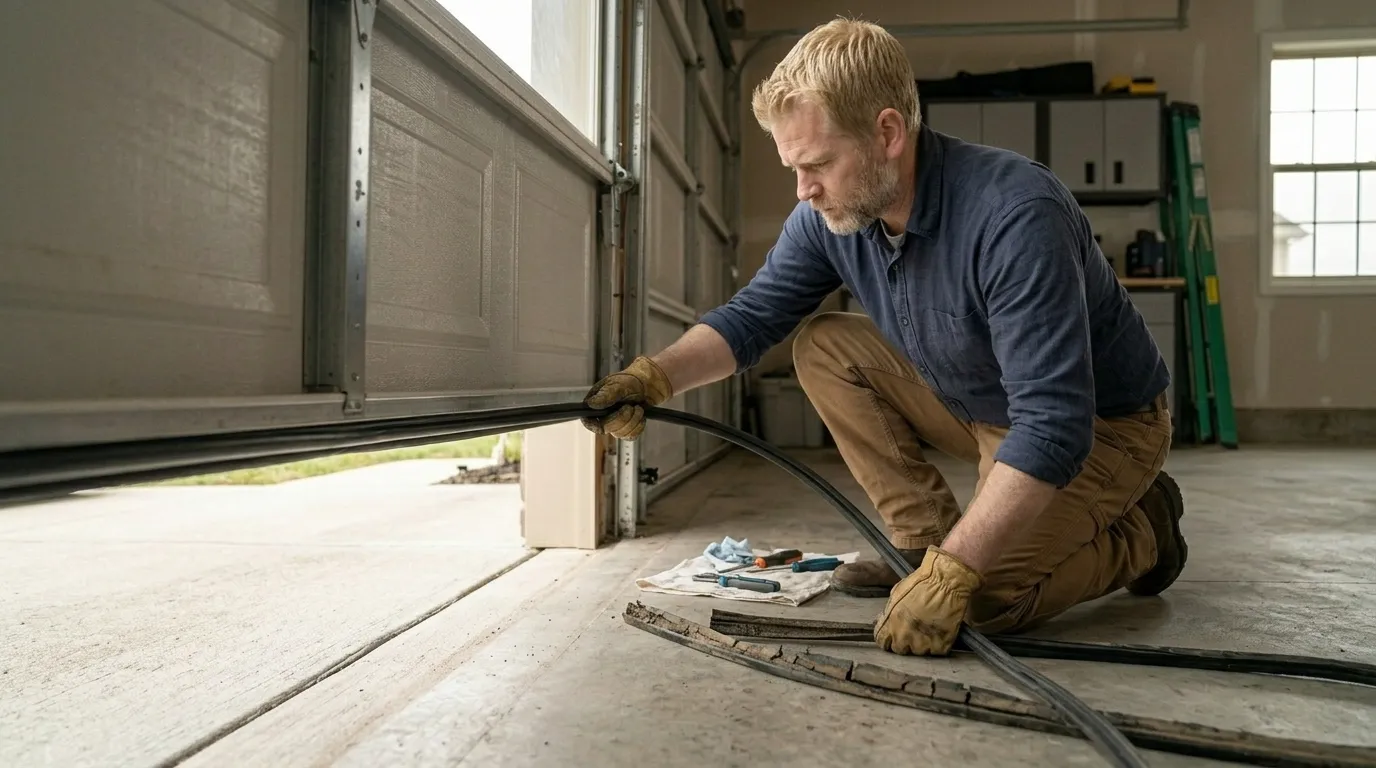
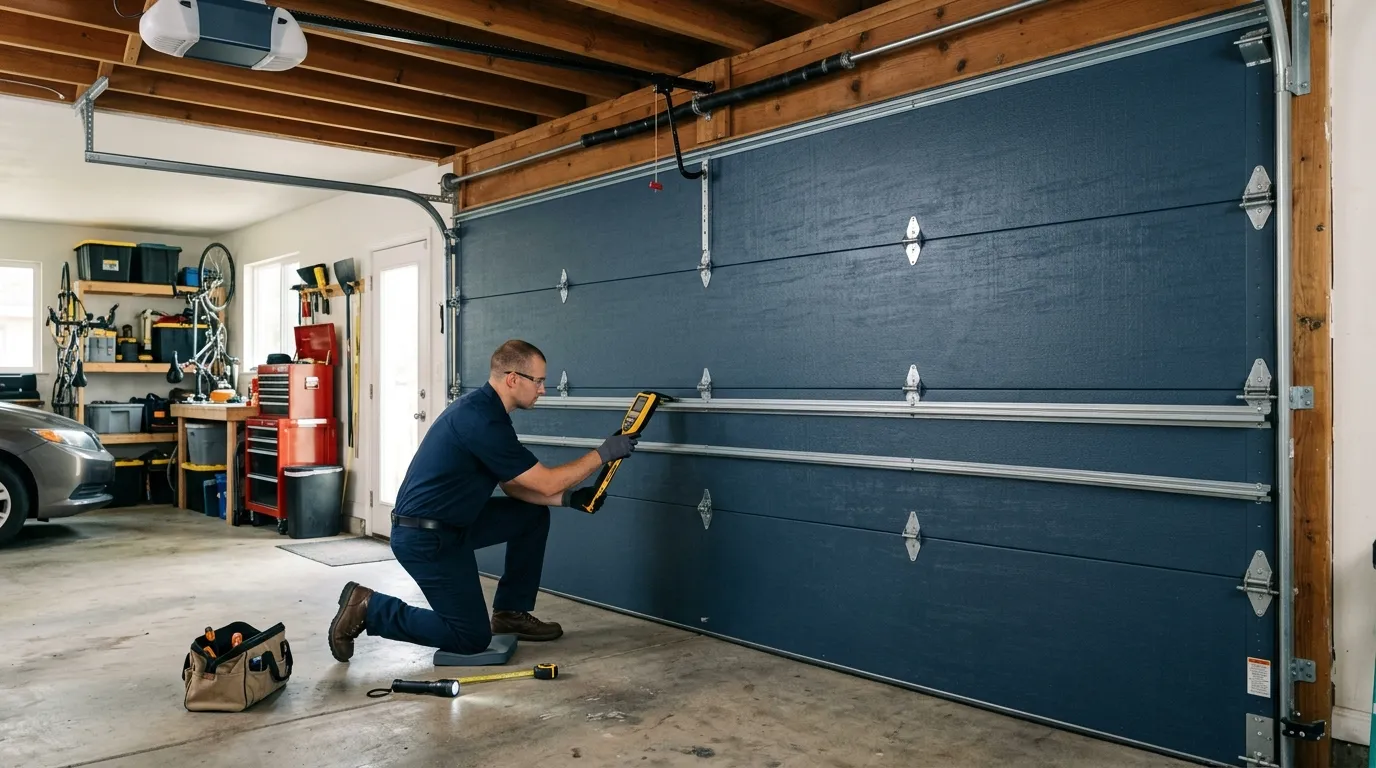
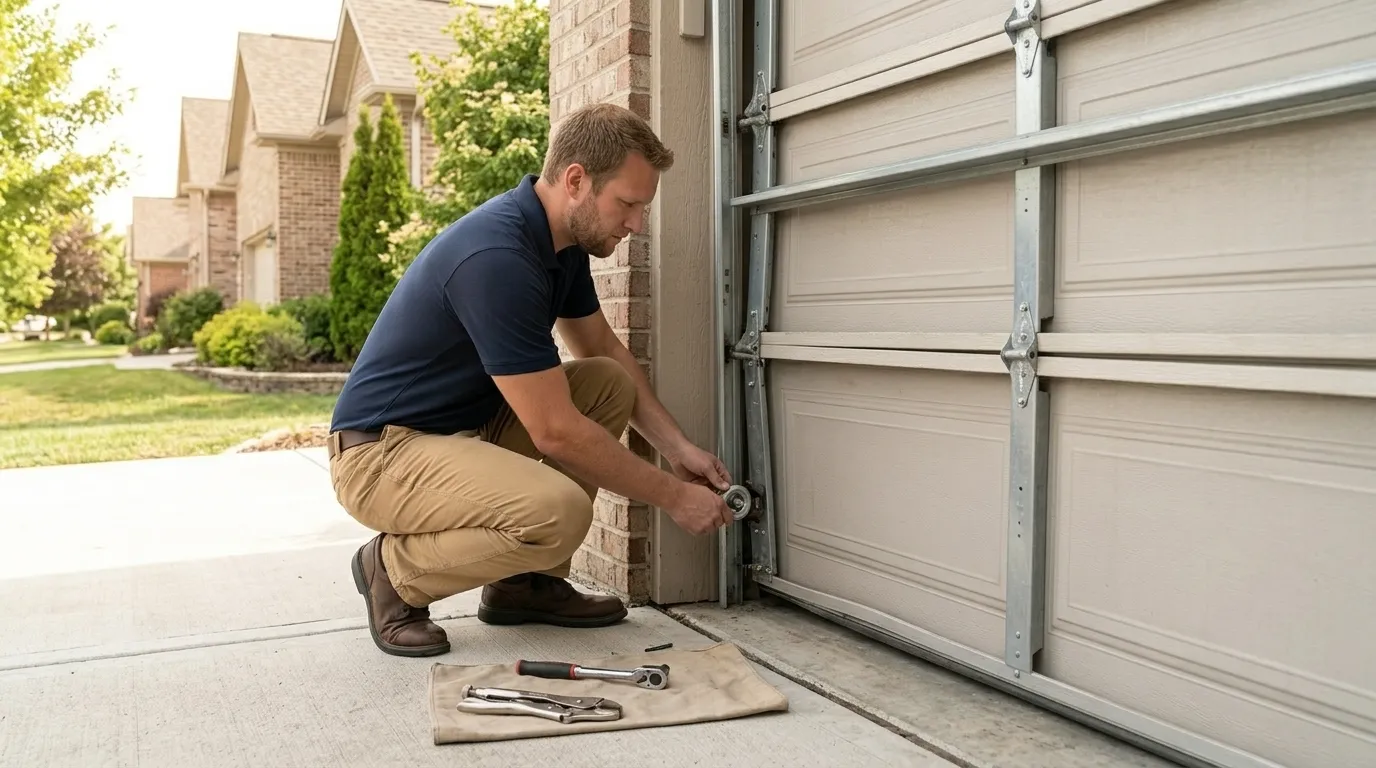
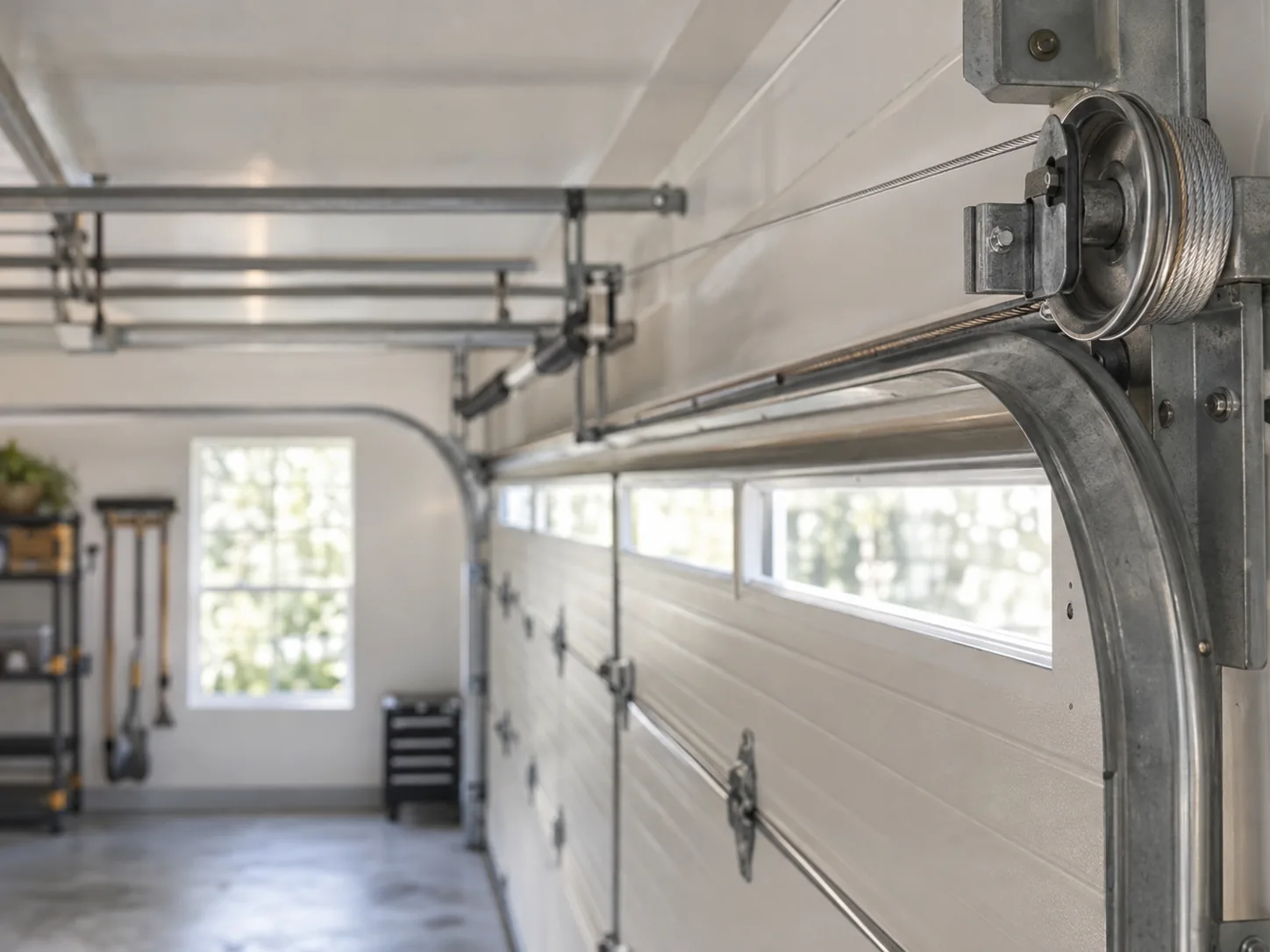
Panels take damage two ways around here, and both trace back to the same things: old housing stock and a cold, severe climate. The first is straightforward impact - a car bumper, a trailer hitch, a snowblower backed up wrong. The second is slower and it's specific to doors this age: steel panels from the 1960s and 70s don't have the thermal breaks or the gauge steel used in current production, so they flex more in temperature swings and dent more easily on contact than a door built in the last fifteen years.
Cold-climate freeze-thaw cycling is the other half of it. Moisture works into seams and mounting points on older panel sections, and once rust starts at a hinge point or along a bottom panel, the steel weakens right where it takes the most stress from daily opening and closing. On a door that's already 40 or 50 years old, a small dent that would be cosmetic on a newer door can be the thing that finally cracks a corroded panel edge.
This isn't a Warren-specific defect - it's what happens to doors built in this era, sitting through this many winters, across the 22 named areas we work in. Newer doors in the same climate hold up better because the steel and the coatings are better.