
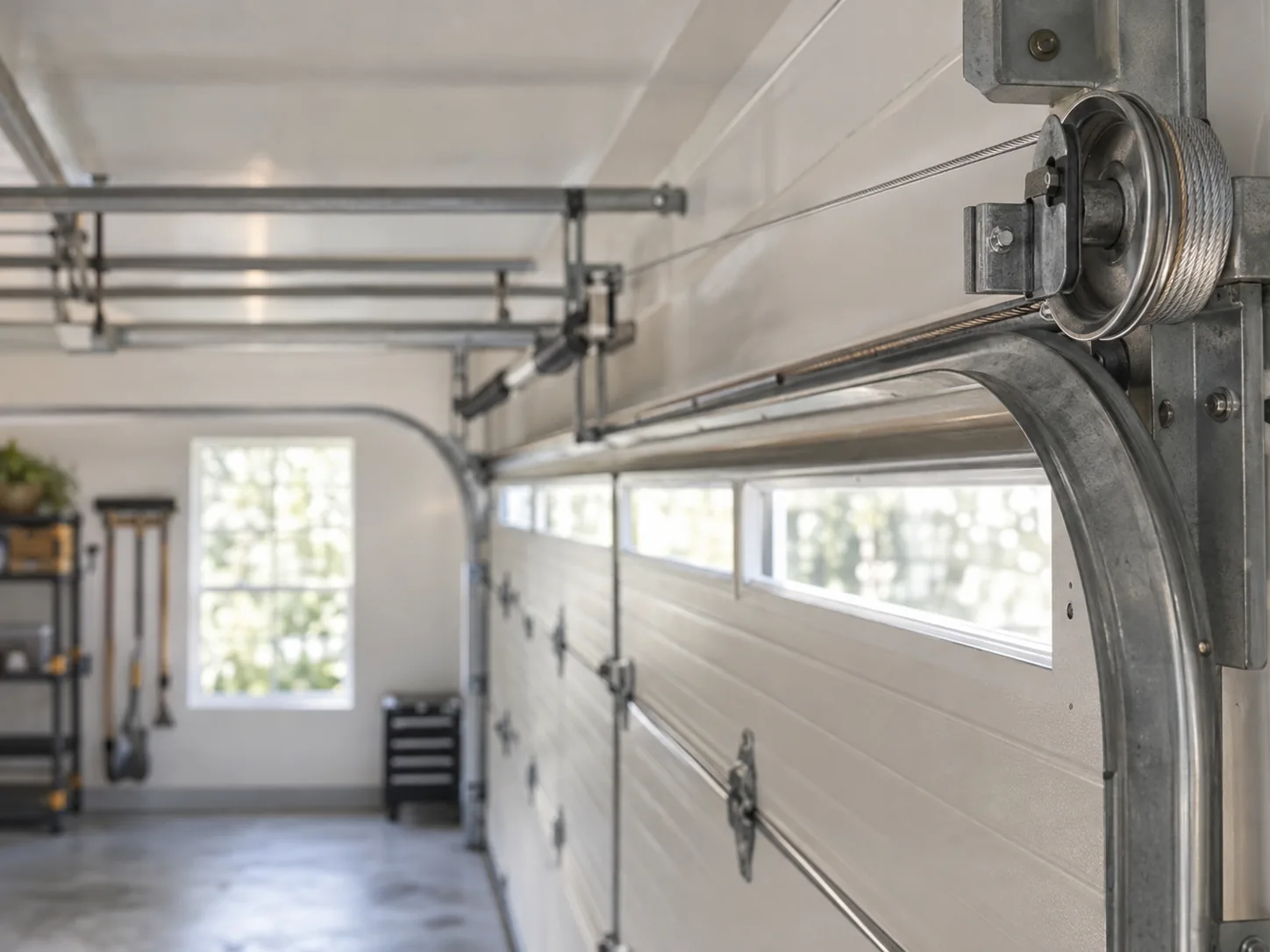
Cable fraying near bracket
Cables that look frayed near the bottom bracket, or a door that hangs crooked on one side, both point to hardware that's reached the end of its service life rather than something a squirt of lube will fix.
Warren, OH
Maintenance built around Warren's 1960s housing stock and cold winters, covering the 22 communities from Leavittsburg to Lowellville that share the same doors and same weather.
The repair
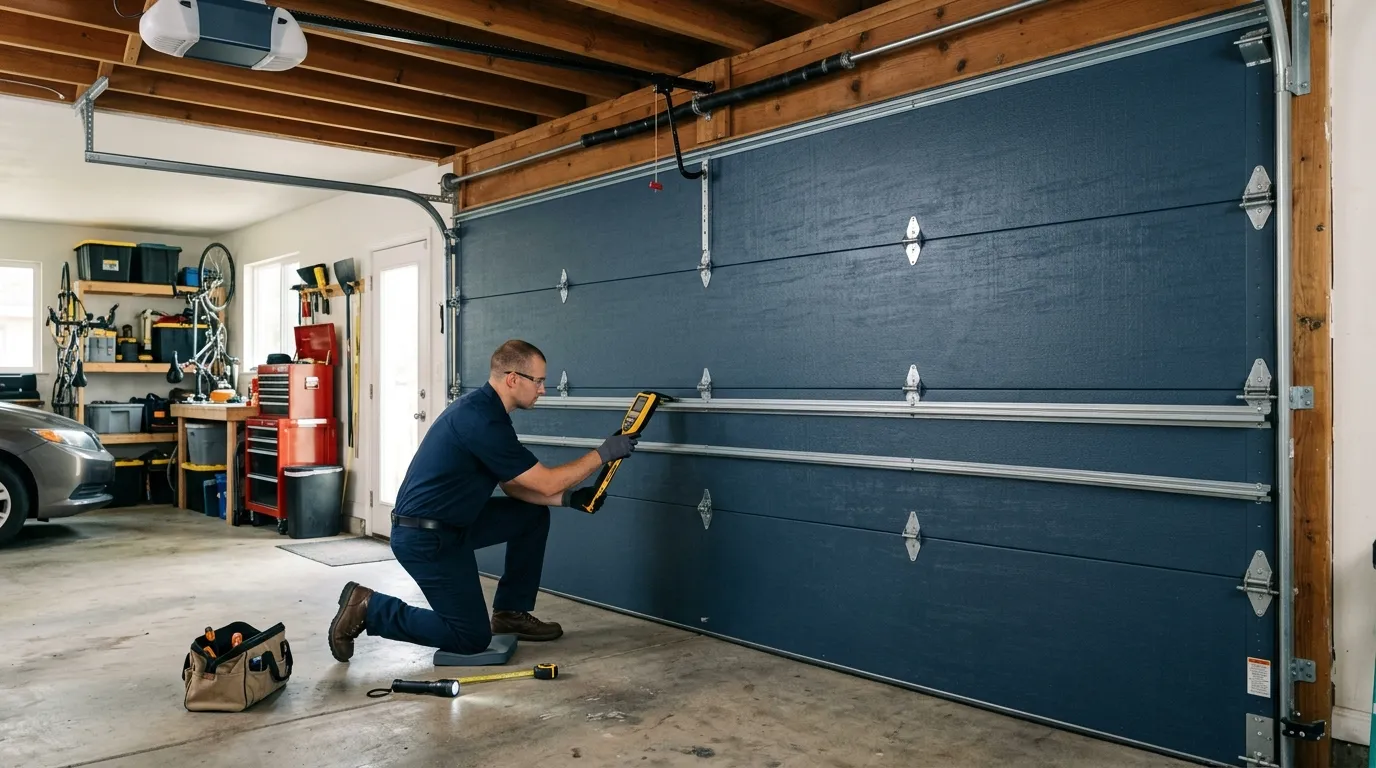
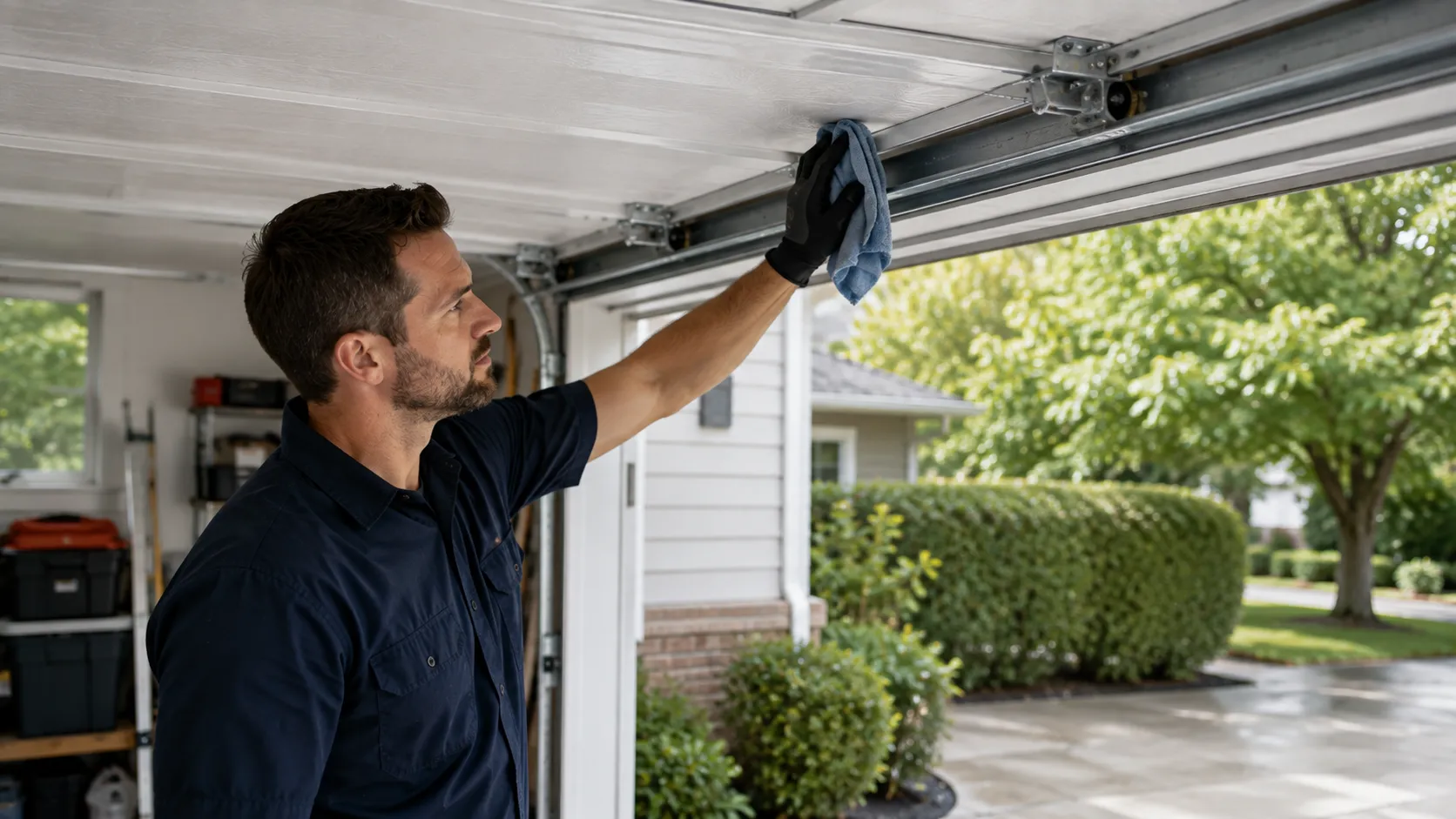
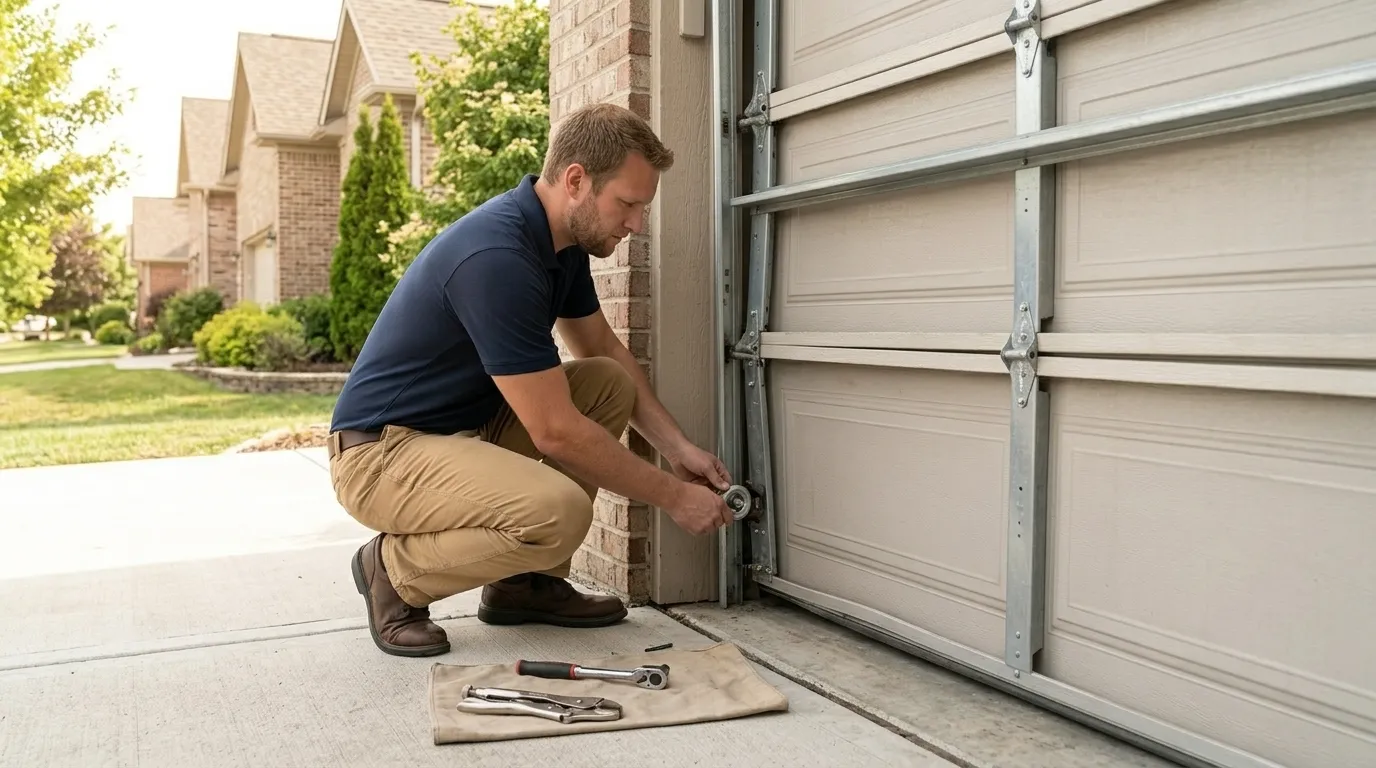
A maintenance visit on a house in this service area usually runs the same short list: check spring tension, lube the track and hinges, tighten the loose hardware that vibration always works free, inspect cables for fraying, and test the auto-reverse safety sensors.
On the older end of the housing stock - homes built as far back as 1938 - that list gets longer, because the track brackets are original and the fasteners have had sixty-plus years to back out of wood jambs that have shrunk and swelled with every season.
We're honest about what a maintenance call is not: it isn't a replacement for a repair once a spring has already gone or a panel is bent. If the door is past adjusting, we'll say so instead of charging you for a tune-up that won't hold.
Most of the doors we service across this area were installed on houses from the 1960s and 70s, and that generation of hardware responds well to routine lube and tension checks - it just needs someone to actually do it on a schedule instead of waiting for a 6 a.m. failure in January.
Local causes
Median home age across this service area sits around 1963, and the bulk of the stock clusters in the 1960s and 70s across the 22 communities we work in, from Leavittsburg and Howland Center out to Cortland and Girard. That generation of garage door hardware was built for a lighter climate expectation than what this region actually delivers. The area sits in a severe cold climate band, and steel springs and cables lose flexibility and tension faster when they're cycling through hard freezes every winter - that's a physics problem, not a brand problem.
Houses from this era also tend to have unheated or minimally insulated garages, so the hardware inside takes the full swing of outdoor temperature. A spring rated for a moderate climate wears out measurably faster here, and lubricant that would last a season somewhere milder gums up or thins out sooner. That's the whole case for maintenance instead of waiting for a failure: on a 1960s door in a cold-band climate, the parts degrade on a schedule, and a fall or spring check catches most of it before it becomes a locked-out door on the coldest morning of the year.
On the truck
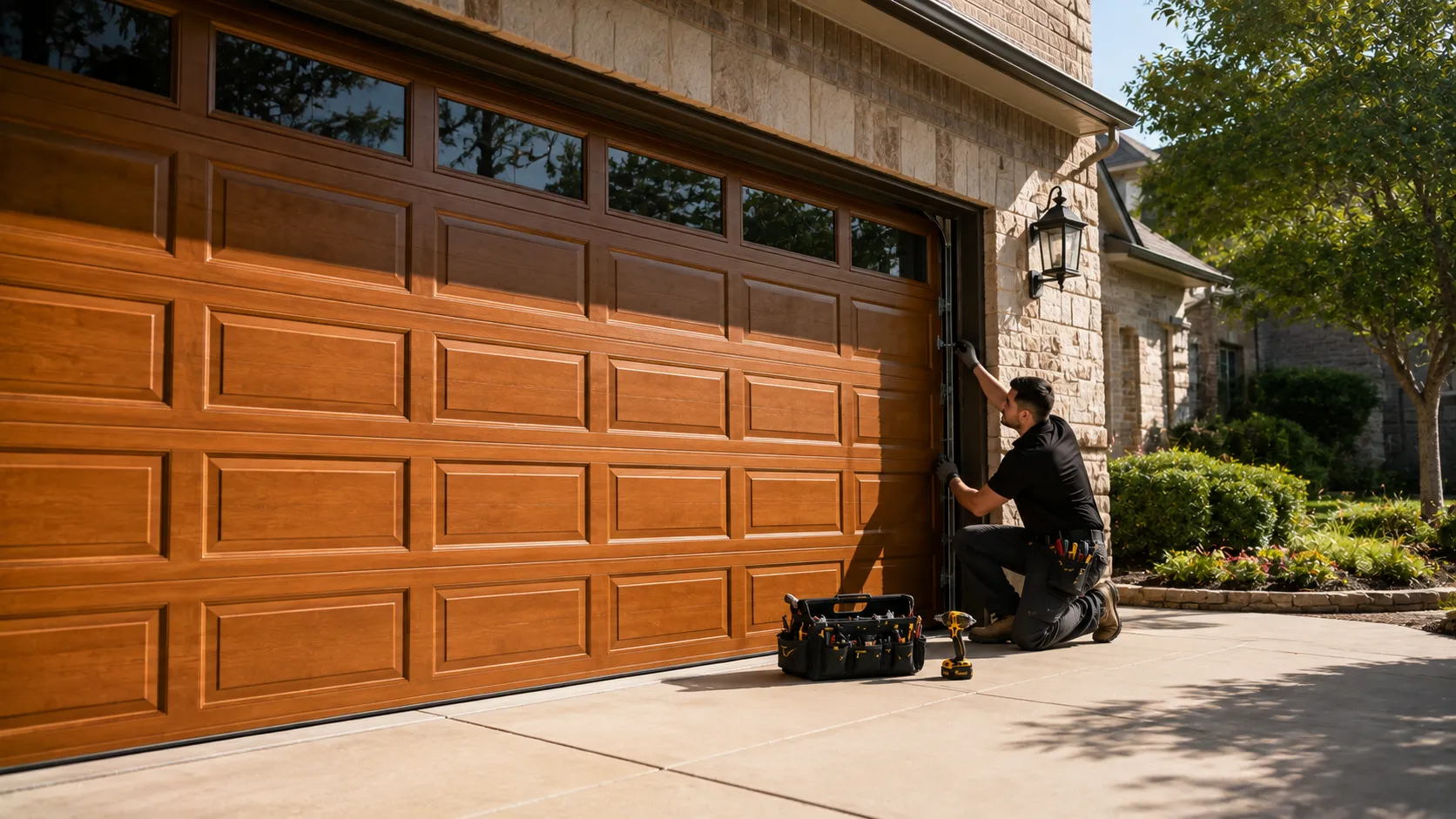
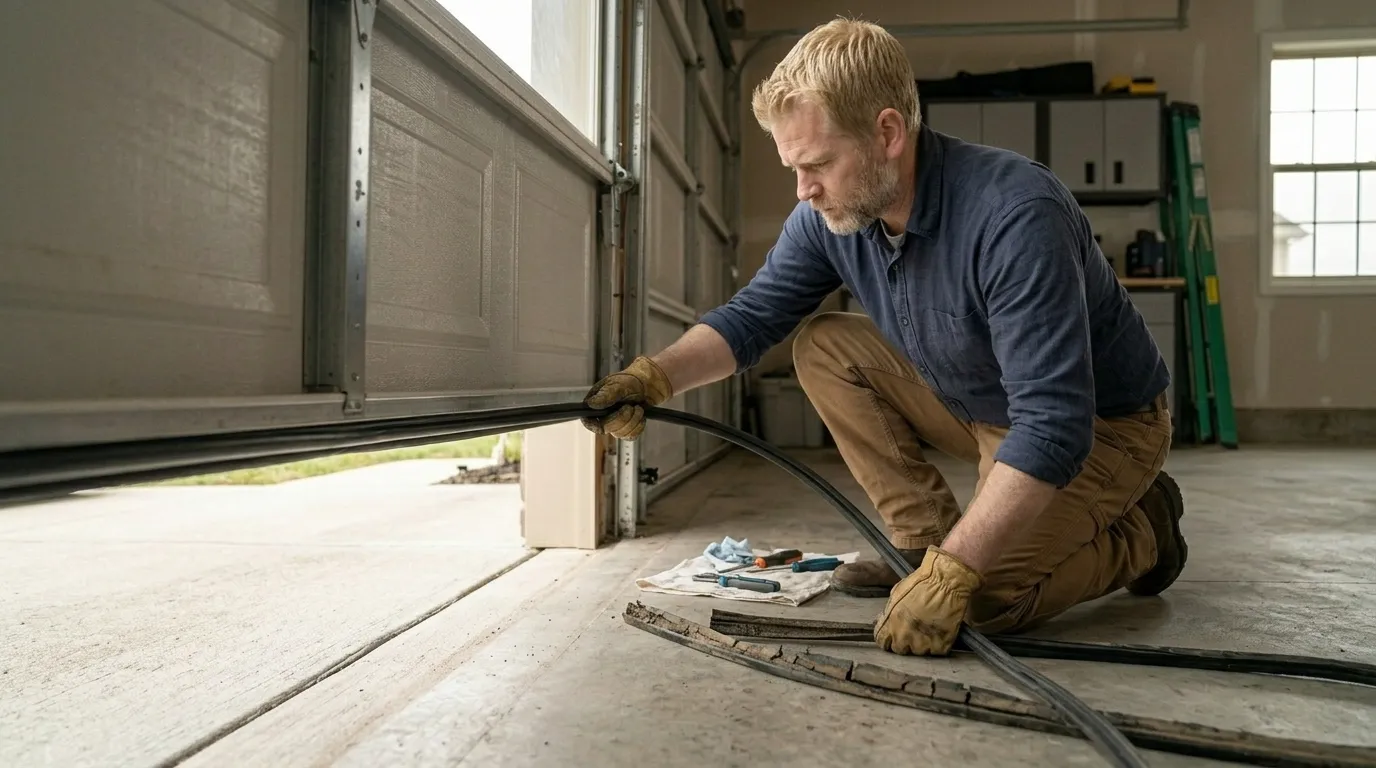
We stock the wear parts that fail most often on the housing stock common to this service area: torsion and extension springs sized for standard residential doors, nylon and steel rollers, lift cables, and the hinges and end bearing plates that take the brunt of daily cycling. We also carry weatherstripping and bottom seals sized for the door widths typical of homes built in the 1960s and 70s, since cold-climate seals wear faster and a gapped bottom seal lets in the kind of draft that raises a heating bill fast in a severe winter.
What we don't stock on the truck is anything obsolete or proprietary - some doors from the earliest end of the 1938-1981 range used hardware that hasn't been manufactured in decades, and if that's what you've got, we'll tell you straight rather than promise a part we'd have to source and mark up. For everything in the common range, though, a maintenance visit usually means the part goes on the same day, not on a return trip.
Warning signs
If your door groans or jerks partway through the cycle, that's usually a roller or track alignment issue rather than the opener itself. A door that's noticeably heavier to lift by hand than it used to be is a spring losing tension - common on houses that have had the same springs since a mid-century build.
Cables that look frayed near the bottom bracket, or a door that hangs crooked on one side, both point to hardware that's reached the end of its service life rather than something a squirt of lube will fix.
Cold mornings expose problems that don't show up in summer: a door that opens fine in July but drags or reverses unexpectedly once temperatures drop is telling you the springs or the opener's force settings need attention before winter, not during it.
Across the roughly 35,694 owner-occupied houses in this service area, that's the single most common reason people call for maintenance in October and November rather than waiting until something breaks in January.
Questions
With winters in the severe cold band this region sits in, once a year before the first hard freeze is the minimum. Springs and cables lose flexibility fast in cold, and a fall check catches most of what would otherwise fail on the coldest morning of the year.
It does. Most homes across this service area date to that era, and original hardware from a mid-century build often uses fasteners and brackets that have loosened over decades. A maintenance visit on a house this age usually takes longer than on newer construction, just to retighten everything properly.
A heavy door usually means the spring has already lost tension, which is a repair, not a maintenance item. We'll still check the rest of the door on that visit, but we won't charge you for a tune-up when what you need is a spring swap.
Explore more
Ready when you are
Warren Garage Door Pros repairs and installs garage doors, springs and openers in Warren, OH and the surrounding area.